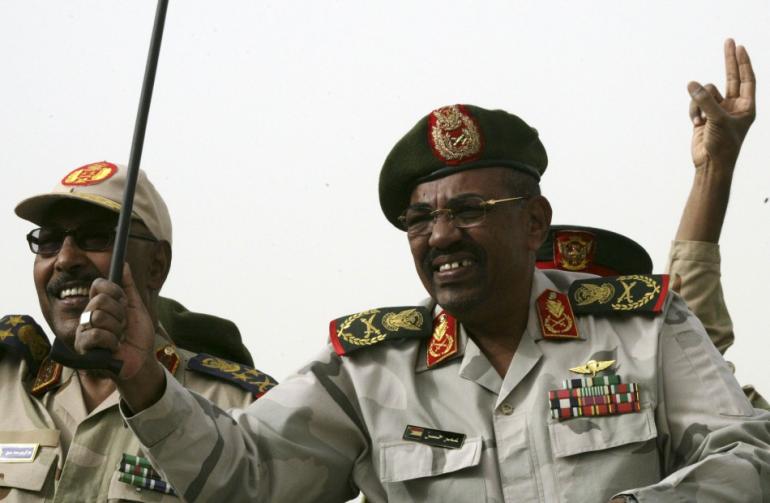


By Friday security forces in Sudan had shot dead at least 50 people in days of protests over fuel subsidy cuts, human rights groups have said according to BBC.
The African Centre for Justice and Peace Studies and Amnesty International say people have been killed by gun shots to the chest or head, citing witnesses, relatives, doctors and journalists.
A 14-year-old boy was among the victims, who were mostly aged between 19 and 26.
“Shooting to kill including by aiming at protesters’ chests and heads is a blatant violation of the right to life, and Sudan must immediately end this violent repression by its security forces,” said Lucy Freeman, Africa Deputy Director at Amnesty International.
Sudanese officials have not commented on the claims but Information Minister Ahmed Belal Osman said on Thursday that any death tolls higher than 29 were inaccurate.
Protesters have accused President Omar al-Bashir’s government of corruption and called on him to quit.
Officials have condemned the protests as acts of sabotage, describing them as “premeditated”, Politicians, including President Omar al-Bashir, have defended the austerity drive, saying the only alternative would be economic collapse, local Sudanese media said.
In a statement released in Arabic, the US embassy in Khartoum called for calm.
“We call on all sides not to resort to force and to respect civil liberties and the right to peaceful assembly,” the statement said.
The embassy said it had received “regrettable reports of serious injuries and attacks on property during demonstrations which turned violent”.
The unrest began on Monday when the government lifted fuel subsidies to raise revenue. These austerity measures have recently escalated fuel prices, hitting people on low incomes.
The demonstrations began south of Khartoum and have now spread to the capital and other cities.
Around 500 people took to the streets of Jabra, an area in the southern part of Khartoum, chanting “peaceful, peaceful” to stress their non-violent nature.
Security forces fired tear gas against the protestors and made several arrests and trucks with mounted machine guns were parked at main roads and near large mosques across Khartoum and its twin city of Omdurman ahead of Friday’s protests.
In July 2012, the Sudanese government reduced some fuel subsidies, prompting several weeks of protests and a security crackdown.
Politicians, including President al-Bashir, have defended the austerity drive, saying the only alternative would be economic collapse, according to local media reports.
Under Omar al-Bashir, there has been little tolerance for demonstrations.
Sudan, once the largest and one of the most geographically diverse states in Africa, split into two countries in July 2011 after the people of the south voted for independence.
The government of Sudan gave its blessing for an independent South Sudan, where the mainly Christian and Animist people had for decades been struggling against rule by the Arab Muslim north.
However, various outstanding secession issues especially the question of shared oil revenues and the exact border demarcation have continued to create tensions between the two successor states.
In addition, the grievances of the northern states of South Kordofan and Blue Nile remain unaddressed, as provisions laid out for them in the 2005 Comprehensive Peace Agreement were never fully implemented.
Sudan has long been plagued by conflict. The north-south civil war cost the lives of 1.5 million people, and a continuing conflict in the western region of Darfur has driven two million people from their homes and killed more than 200,000.
In Darfur, in western Sudan, the United Nations has accused pro-government Arab militias of a campaign of ethnic cleansing against non-Arab locals.
However the Sudanese president did not attend the current ongoing (UNGA) after he was denied visa.
Christian Wenaweser, the U.N. ambassador of Liechtenstein and former president of the Assembly of ICC States Parties told the Washington Post.
“We think it would have been bad for the United Nations to host someone who has been issued an international arrest warrant”.
State media quoted foreign ministry spokesman Abu-Bakr Al-Sideeg as saying not only had the U.S. committed war crimes in Iraq, but it was “also the protector and supporter of the biggest violator of human rights and perpetrator of crimes against humanity and war crimes, the worst ever in the world, which is Israel.”
“President Bashir, as you know, stands accused of genocide, war crimes and crimes against humanity by the International Criminal Court,” said Samantha Power US ambassador to the UN .
“Such a trip would be deplorable, cynical and hugely inappropriate.”
“It would be more appropriate for him to present himself to the ICC and travel to The Hague,” she added.
Comments
About Author