


By Norman Muvavarirwa
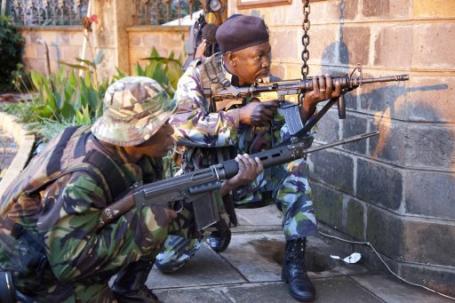
On Saturday gunmen stormed a shopping mall in the Kenyan capital Nairobi killing at least 68 including close relatives of Kenya’s President, 175 were injured over two days of carnage.
Somalia’s Al Qaeda-linked rebel group al-Shabab claimed responsibility for the attack in which they used grenades and assault rifles.
The operation is widely being seen as both a payback to Kenya for driving Al Shabab out of urban centres in Somalia, and a publicity initiative to display the group’s international character, even as its fortunes have been on the decrease in its area of prime interest, which is Somalia proper.
The Westgate mall is an upmarket complex of cafés, shops, and food courts frequented by officials from foreign missions and the United Nations complex is just a couple of miles away.
Commentators have noted that Westgate is partly Israeli-owned and this stalks Al Shabab’s stated anger over Kenya’s role in Somalia.
The attacks, claimed by Al Shabab, a Somalia -based Islamist radical group whose name means “the youth,” started on Saturday when cars of men carrying guns pulled up to the entrance of the Westgate, killing and taking hostages, and unleashing four days of chaos and bloodshed that have shocked Kenya.
FBI and special Israeli forces supported Kenyan forces, combated the 10-15 militants for a third day on Monday.
More than 1,000 people were rescued during the attack, the brutality has shocked the nation and attracted international condemnation.
In 2010, Al Shabab claimed responsibility for bombing a soccer stadium in Uganda, killing more than 70 people.
Kenya said it was forced to send troops into Somalia in 2011 after the militants carried a series of attacks inside Kenya’s borders.
Kenya’s 4,000 forces have since been integrated into an African Union mission in Somalia.
Al Shabab has suffered a series of defeats, largely at the hands of Kenyan troops or their local proxies, who have driven the militants out of a key stronghold, the port of Kismayo.
The new Somali government accuses Kenya of creating a new proxy state called Jubaland along the common border of the two states.
“Kenya has done a good job in Somalia. They had been neutral up until 2011. The longer they stay in Somalia, the more they will be seen as an occupying force,” said Abdiwahab Sheikh Abdisamad, a Nairobi-based expert on Horn of Africa issues.
Still, “Al Shabab is no longer a Somalia problem or a Somalia baby. It is now an international problem,” added Abdisamad.
Al Shabab’s Twitter account, started last winter and included the statement: “War is war! We promise Kenyans will pay the ultimate price like Ethiopians did in 1998, Americans did 1993… 4000 Kenyans barricading themselves behind our children and women. Our Mujahideen will wipe Kenya off the map.”
Officials at the social media firm Twitter reportedly shut down the militant group’s account on Sunday night.
According to Abdisamad, many of the fighters involved in the attack were not from Somalia, and the group’s high-profile attack is being done to give it publicity needed in its own ranks and abroad.
“Al Shabab has a network of supporters from around the world,” he said. “But I think they are being defeated and they are now looking for relevance. What we are seeing are last kick of a dying horse.”
This year, Al-Shabab posted a 40-minute recruitment video, “Minnesota’s Martyrs: The Path to Paradise,” that follows three Americans from the Twin Cities as they go to training camps in Somalia and die for the jihadist cause.
One of the young men urges others to follow, saying, “This is the real Disneyland. You need to come here and join us!” The narrator praises the trio as the “Minnesotan martyrs” whose “decisive moment” came when they were martyred in a jihad against foreign troops in Somalia.
According to the video, one of the three featured was Troy Kastigar, a convert to Islam who was killed in Mogadishu in September 2009, about 10 months after arriving from Minnesota. Three other Somali-Americans—Abdisalan Hussein Ali, Farah Mohamed Beledi, and Shirwa Ahmed became Al-Shabab suicide bombers, dying in blasts in Mogadishu in recent years.
The attackers included some women. The Islamic extremist rebels said the attack was retribution for Kenyan forces’ 2011 push into neighboring Somalia.
An al-Shaabab spokesman told British Channel 4 News that westerners would not be safe in Kenya until the country pulled its forces out of Somalia.
He said: ‘Kenyans have blood on their hands. Anyone who is prepared to come to Kenya must be prepared to face the reality.
‘We don’t fear Europeans and Americans because we are not weak. And we are saying to the Europeans and the Americans who have been supporting those who have been attacking us, you should tell the Kenyans to stop their aggression if you want to be safe.’
Al-Shabab said on its new Twitter feed – after its previous one was shut on Saturday – that Kenyan officials were asking the hostage-takers to negotiate.
‘We’ll not negotiate with the Kenyan govt as long as its forces are invading our country, so reap the bitter fruits of your harvest,’ al-Shabab tweeted.
The group opposes Kenya’s participation in a peacekeeping mission in Somalia.
One post declared that there would be ‘no negotiations whatsoever’. It said it had previously warned the Kenyan government that, if they did not remove military forces from Somalia, there would be ‘severe consequences’. Another continued this theme: ‘We’ll not negotiate with the Kenyan govt as long as its forces are invading our country, so reap the bitter fruits of your harvest.’
It also tweeted: ‘For long we have waged war against the Kenyans in our land, now it’s time to shift the battleground and take the war to their land,’
Kenyatta pledged to hunt down and punish the terrorists behind the brutal attack in up market Nairobi, in which a further 150 people were injured.
Kenyan President Uhuru Kenyatta who has lost relatives in the attack – reiterated his government’s determination to continue fighting al-Shabab.
‘We… went into Somalia to help stabilise the country and most importantly to fight terror that had been unleashed on Kenya and the world,’ he said.
‘We shall not relent on the war on terror.’ He said although this violent attack had succeeded, the Kenyan security forces had ‘neutralised’ many others. – News of The South
Comments
About Author





Comments Closed .