An analytical feature | News of The South |Princess Eugene Majuru – 10 November 2026
In Zimbabwean traditional belief systems, the relationship between the living and the dead does not end at the grave. Ancestors remain part of the spiritual and cultural identity of families, clans and communities. They are remembered as guardians of ancestral land, custodians of moral values and protectors of future generations. But what happens when their authority is disregarded, sacred places are violated, traditional ceremonies are performed incorrectly, or ancestral remains are handled without consulting their rightful custodians? Within many Zimbabwean traditional communities, such actions are believed to carry serious spiritual consequences. These may be understood as ancestral displeasure, misfortune, persistent family difficulties or, in particularly serious cases, ngozi, an avenging spirit associated with unresolved wrongdoing. The belief is that certain transgressions cannot simply be forgotten because the person responsible has died or because many years have passed. Unresolved wrongs may be understood as obligations passed from one generation to another until appropriate reconciliation takes place. These are deeply rooted cultural and spiritual interpretations, rather than scientifically established explanations for illness, death or misfortune. Nevertheless, they remain influential in how many Zimbabweans understand justice, responsibility, family relationships and respect for ancestral heritage.
Mount Nyangani: The mountain where tradition demands respect
Mount Nyangani, Zimbabwe’s highest mountain, is one of the country’s most widely discussed sacred landscapes. Situated within Nyanga National Park in Manicaland, the mountain is surrounded by longstanding traditional beliefs, accounts of spiritual guardianship and stories about people who have disappeared while exploring its slopes. Among some local communities, visitors are traditionally advised to observe certain customs, including respecting the mountain’s spiritual significance, avoiding disrespectful conduct and seeking appropriate guidance before entering areas regarded as sacred. Stories have circulated for generations about visitors who allegedly disregarded these customs and subsequently experienced mysterious events or disappeared. Such accounts have helped establish Mount Nyangani’s reputation as a place where human behaviour is believed to have spiritual consequences. However, the mountain also presents real physical dangers, including rapidly changing weather, thick mist, difficult terrain and poor visibility. Disappearances cannot automatically be attributed to supernatural causes. The significance of Mount Nyangani lies in the way its history illustrates a broader African understanding of sacred geography. For traditional believers, mountains, forests, rivers and caves may be more than natural features. They can be places associated with ancestral presence, ritual responsibility and spiritual authority. Disrespecting such places is therefore understood by some communities as an offence against both the living custodians and the ancestral world.
Ngozi: When an unresolved wrong is believed to follow a family
Among the most feared spiritual concepts in Shona traditional belief is ngozi.
Ngozi is commonly understood as an avenging spirit associated with a person who suffered a grave injustice, particularly an unlawful killing, and whose grievance remains unresolved.
In traditional accounts, the spirit may be believed to demand acknowledgement, compensation or reconciliation from those responsible.
Some families interpret repeated tragedies, unexplained illnesses, conflict, financial difficulties or other misfortunes as possible signs of an unresolved spiritual grievance.
The belief can extend beyond the original perpetrator. In some traditional interpretations, descendants may inherit the responsibility to address an injustice committed by an ancestor, even though they were not personally involved. This is one of the most challenging aspects of the ngozi belief system: the idea that wrongdoing can create obligations extending across generations.
However, it is important to distinguish inherited cultural obligations from personal guilt. Children and descendants should not be presumed responsible for an ancestor’s actions, and illness or misfortune should never be treated as proof of spiritual punishment. Traditionally, families seeking reconciliation may consult recognised elders or spiritual practitioners to establish what form of acknowledgement or restitution is considered appropriate. Depending on the circumstances and the community’s customs, this may involve mediation between families, compensation, an apology or a ceremonial process intended to restore harmony. The central cultural lesson is that serious wrongdoing should not be ignored simply because the original offender is no longer alive.
The wrath of the ancestors: How spiritual consequences are understood
In Zimbabwean traditional thought, ancestral displeasure is sometimes described through the concept of midzimu yakatsamwa — ancestors who are angry or dissatisfied.
Where customary obligations are believed to have been violated, families may interpret certain experiences as warnings that something remains unresolved.
These interpretations can include persistent family disagreements, repeated setbacks, disturbed relationships, difficulties surrounding traditional leadership or misfortunes that relatives struggle to explain. In some communities, ancestral displeasure is believed to affect not only individuals but entire family lineages or traditional institutions. A royal family, for example, may understand the neglect of important ancestral obligations as a threat to the continuity of its customs and authority. Such beliefs place considerable responsibility upon traditional leaders, spiritual custodians and family elders. They are expected to preserve ancestral knowledge, safeguard sacred places, observe appropriate ceremonies and ensure that cultural obligations are not casually disregarded. Yet spiritual explanations should not replace medical care, investigation or practical solutions when families face illness, accidents or other difficulties. Respect for ancestral beliefs and responsible attention to real-world causes can coexist.
Sacred graves and ancestral remains: Why disturbing the dead is a serious matter
The treatment of human remains is among the most sensitive issues in African traditional heritage. For many communities, burial grounds are not simply places where bodies are deposited. They are sacred spaces connecting the living with their ancestors. Disturbing graves, removing remains without consultation or handling ancestral bones in ways considered disrespectful may be understood as a serious cultural violation. The concern becomes even greater when the remains belong to traditional leaders, royal ancestors, spiritual figures or individuals who defended their communities. Such ancestors may have responsibilities and relationships associated with particular clans, families and territories. Consequently, their remains cannot automatically be treated as objects belonging to the state merely because they are historically significant. Their descendants and traditional custodians may have established obligations concerning burial, reburial, ceremonial reception and the protection of sacred objects. When these responsibilities are ignored, some traditional believers fear that the resulting spiritual imbalance could affect those involved in the process. Whether or not one shares these beliefs, the cultural importance of proper consultation is undeniable.
Sacred artefacts are not ordinary possessions
The same principles apply to sacred artefacts. Traditional drums, ceremonial staffs, royal objects, ritual vessels and other cultural possessions may carry meanings extending far beyond their physical appearance. Some are associated with particular ancestors. Others represent chiefly authority, clan identity, spiritual practice or specific historical events. An artefact belonging to one clan may have ceremonial requirements that differ from those of another. This is why repatriation programmes must establish the provenance and cultural significance of each object. Returning an artefact to Zimbabwe does not automatically resolve questions about its rightful custodian or the ceremonies appropriate to its reception. For communities that regard these objects as spiritually significant, incorrect handling may be interpreted as disrespect towards the ancestors. It is therefore essential that government institutions, museums and repatriation delegations work with knowledgeable cultural custodians rather than assume that a single ceremony can adequately represent every tradition.
The month of a goat: why timing matters
Zimbabwe is currently within a period recognised by some traditional communities as the sacred Month of the Goat, commonly associated with restrictions on certain ancestral ceremonies.
In the observance discussed by traditional custodians, this period runs from 15 October to 15 November.
Today, 10 November 2026, only five days remain before the end of that period.
Within communities that observe these restrictions, certain ceremonies may be postponed because the timing is considered spiritually inappropriate.
The reasoning is rooted in the belief that ancestral matters must be approached with discipline, patience and respect for established customary calendars.
Different communities may observe different dates and restrictions, and these practices should not be presented as universally identical throughout Zimbabwe.
Nevertheless, the principle is significant: sacred cultural activities should be planned in consultation with those responsible for the relevant traditions.
Where ancestral remains or sacred artefacts are involved, ignoring customary timing may create serious concerns among traditional believers, even when those organising the process believe they are acting with good intentions.
Appeasement ceremonies: Seeking forgiveness and restoring harmony
When traditional protocols are believed to have been violated, some Zimbabwean communities undertake ceremonies intended to acknowledge wrongdoing and seek ancestral reconciliation.
These are sometimes described as appeasement ceremonies. Depending on the tradition, the process may involve a bira, consultation with elders, traditional prayers, ceremonial music, offerings or other culturally prescribed practices. The purpose is not necessarily to punish those responsible. Rather, it is to acknowledge an alleged breach, seek forgiveness where appropriate and restore harmony between the living community and its ancestral traditions. Importantly, an appeasement ceremony should not be treated as a universal solution that can be organised by anyone. The customs of the affected clan or community determine who has the authority to participate, what ceremonies are appropriate and when they may take place. Ancestral appeasement also does not remove the need for practical accountability where wrongdoing has occurred. If cultural objects have been mishandled, records should be corrected. If families have been excluded, meaningful consultation should take place. If human remains have been misidentified, proper investigations should follow. Spiritual reconciliation and institutional accountability address different responsibilities.
Can the consequences extend to future generations?
One of the most profound aspects of Zimbabwean ancestral belief is the understanding that a family’s history can shape the responsibilities of later generations.
Traditional narratives sometimes describe descendants encountering difficulties because earlier generations failed to resolve disputes, honour obligations or make restitution for wrongdoing.
This belief is particularly prominent in discussions about ngozi, disputed inheritance, neglected graves and unresolved conflicts involving ancestral land.
From a cultural perspective, such narratives reinforce the importance of remembering historical injustices and seeking reconciliation.
But they should not be used to frighten families or accuse innocent people of carrying supernatural guilt.
There is also a practical dimension to intergenerational consequences.
Unresolved land disputes, family divisions, concealed historical wrongs and the loss of cultural knowledge can affect descendants for decades without requiring a supernatural explanation.
Traditional reconciliation may therefore have both spiritual meaning for believers and social value in helping communities confront painful histories.
First Chimurenga repatriation: A warning against disregarding tradition
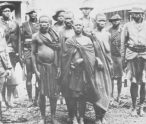
The ongoing discussions surrounding the repatriation of Zimbabwe’s First Chimurenga ancestral remains and sacred artefacts from Britain have renewed questions about the relationship between government authority and traditional custodianship. The return of ancestral heritage is a matter of national historical importance. However, the process also concerns particular families, clans and traditional institutions whose ancestors and possessions were removed during the colonial period. The spiritual meaning of these remains and artefacts cannot be determined solely by administrative officials. Nor should the cultural diversity of Zimbabwe’s traditional institutions be overlooked. Where sacred objects belong to different clans, the relevant custodians must be involved in determining how those objects should be received, protected and eventually returned to their appropriate communities. Where ancestral remains are involved, identification, dignity, consent and traditional obligations require particular care. Concerns about customary protocols should be examined seriously, without assuming that any specific individual or delegation has incurred supernatural punishment. The objective must be cultural restoration, not fear or blame.
The ancestors, the living and the responsibility to future generations
Zimbabwe’s traditional heritage carries an enduring message about the relationship between power and responsibility. Ancestral authority is not simply a matter of titles, ceremonies or public recognition. It is associated with obligations to communities, land, history and future generations. Mount Nyangani illustrates the cultural importance of respecting sacred landscapes. The belief in ngozi reflects longstanding concerns about justice and unresolved wrongdoing. Ancestral appeasement ceremonies demonstrate the importance many communities place on acknowledging mistakes and restoring harmony. And the treatment of sacred remains and artefacts reminds us that cultural heritage cannot be separated from the people who inherited responsibility for protecting it. For believers, the wrath of the ancestors is a serious spiritual concern. For the wider public, these traditions also offer lessons about accountability, humility, reconciliation and the dangers of disregarding cultural knowledge.
The central question is not whether people should live in fear of ancestral punishment. It is whether those entrusted with sacred responsibilities are prepared to respect the traditions, histories and communities to which those responsibilities belong.
A nation that seeks to restore its ancestral heritage must do more than recover bones and artefacts.It must also restore respect for the cultural knowledge, traditional institutions and custodians who give that heritage its meaning.
The dead deserve dignity. The living deserve truth. And future generations deserve a heritage protected with wisdom, respect and responsibility.
Comments
About Author