

News of The South | Investigative Analysis | 30 October 2026
By Princess Eugene Majuru
As Zimbabwean authorities intensify their crackdown on allegedly illegal structures, questions are mounting over whether the same planning and environmental standards are being applied to powerful commercial developers and ordinary citizens.
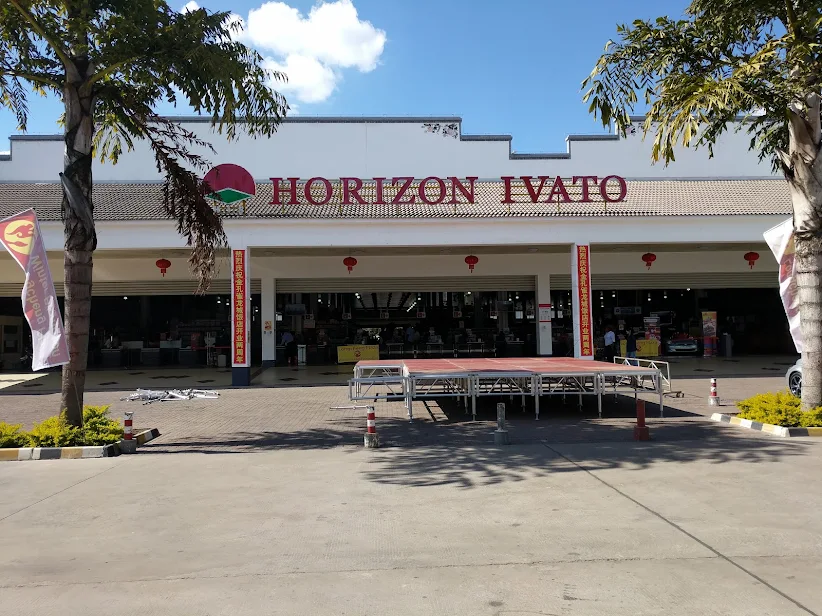
Harare’s Longcheng Plaza, a major Chinese-developed commercial complex, raises an uncomfortable question about fairness, environmental protection and the selective enforcement of urban planning laws in Zimbabwe.
The shopping complex has long attracted controversy over its development on land associated with Harare’s environmentally sensitive wetlands.
Yet while ordinary Zimbabweans face demolition notices, fines and threats of losing their homes over planning irregularities, the broader question remains: what happens when a major commercial development is accused of occupying land that should have been protected?
Should a building’s size, commercial value, foreign investment connections or political influence determine whether planning laws are enforced?
The answer should be no.
Zimbabwe’s laws must apply equally to everyone, whether the property belongs to a struggling family, a wealthy businessman, a foreign investor or a politically connected institution.
But equal enforcement requires more than demolition threats. It requires transparent investigations, reliable evidence, fair procedures and accountability for the authorities who approved questionable developments in the first place.
Longcheng Plaza: A development surrounded by environmental controversy
Longcheng Plaza was developed by the Chinese company Anhui Foreign Economic Construction Corporation and opened in 2013.
The development attracted criticism from environmental campaigners because it was constructed on a gazetted wetland along the Harare-Bulawayo highway.
In 2018, an official from Zimbabwe’s Environmental Management Agency (EMA) reportedly confirmed that the complex lacked the required environmental certification and described the development as illegal.
The mall’s management, however, maintained that the necessary procedures had been followed.
This historical dispute has never ceased to raise questions about environmental governance and the responsibility of authorities who permitted construction to proceed.
In July 2025, Harare East legislator Kiven Mutimbanyoka cited Longcheng Plaza during parliamentary debate on wetland destruction, identifying the development as a troubling example of the failure to protect ecologically sensitive land.
The controversy is therefore not a new allegation arising from the current demolition campaign.
It is a longstanding public concern that deserves a transparent resolution.
Harare gives residents 14 days, but what about Longcheng Plaza?
The latest controversy follows the City of Harare’s announcement of a 14-day compliance period for certain property owners whose developments remain partially regularised.
The notice issued on 26 October 2026 requires affected owners to complete outstanding planning and administrative requirements or risk enforcement action after 9 November.
Residents may be required to pay penalties, submit approved building plans, settle land-related charges and address infrastructure compliance issues.
Council officials have indicated that fewer than 100 properties could ultimately be affected by demolition, depending on compliance, and have described demolition as a last resort.
Some properties on environmentally sensitive land or areas reserved for public amenities may not qualify for regularisation.
This raises an important question.
If Harare City Council is prepared to demolish structures built on wetlands, will it also review Longcheng Plaza under the same environmental and planning standards?
There is currently no verified public announcement establishing that Longcheng Plaza has been scheduled for demolition.
Nor has a demolition deadline for the complex been confirmed.
It would therefore be inaccurate to suggest that the shopping centre is about to be demolished.
But the absence of a publicly confirmed demolition plan does not eliminate the need for accountability.
The City of Harare and EMA should explain the complex’s present legal status, what approvals were issued, whether any violations were subsequently regularised and whether outstanding environmental obligations remain.
Are there two sets of laws in Zimbabwe?
This is perhaps the most disturbing question arising from the current situation.
Across Zimbabwe, families who have invested their life savings in residential properties face the possibility of losing their homes.
Some purchased land believing that sellers possessed legitimate authority to dispose of it.
Others constructed houses over many years, sometimes while local authorities appeared to tolerate the developments.
Now they are being told that their buildings may be demolished because the required planning procedures were not followed.
Yet Longcheng Plaza continues operating despite its well-documented history of environmental controversy.
The contrast creates an understandable public perception that powerful commercial interests may be treated differently from ordinary residents.
That perception should be investigated rather than dismissed.
It is important, however, to distinguish between an allegation of unequal enforcement and proof of unlawful favouritism.
The legal circumstances of each development may differ, including the permits issued, the land’s designation, subsequent approvals and any court decisions.
Nevertheless, the authorities should make those differences public.
If Longcheng Plaza has valid legal authorisation, government should explain how it was obtained and whether it meets current environmental requirements.
If it does not, the responsible institutions should explain what enforcement action is legally available.
The public should not be expected to accept demolition orders against ordinary citizens while remaining uninformed about the status of prominent commercial developments.
Why wetlands matter to Harare’s survival
The controversy extends beyond one shopping mall.
Wetlands perform essential environmental functions that are particularly important to Harare, a city already struggling with water shortages, pollution and inadequate infrastructure.
They absorb rainfall, replenish underground water systems, support biodiversity and reduce the speed at which stormwater enters drainage channels.
When wetlands are covered with concrete, roads, parking areas and buildings, their ability to perform these functions can be severely reduced.
The consequences may include increased flooding, declining groundwater recharge and greater pressure on already overstretched water infrastructure.
Harare’s environmental problems cannot be separated from its planning failures.
A city that destroys its natural water-management systems while failing to maintain artificial drainage infrastructure is creating additional risks for future generations.
Commercial development is necessary for economic growth, but development should take place on suitable land and comply with environmental requirements.
Zimbabwe cannot continue sacrificing environmentally sensitive areas simply because investors are willing to construct expensive buildings.
Chinese investment must comply with Zimbabwean law
China remains an important economic partner for Zimbabwe, contributing to infrastructure development, construction, mining and other sectors.
Foreign investment can create employment, stimulate commercial activity and support national development.
However, investment should never provide immunity from environmental or planning regulations.
The central issue is not the nationality of Longcheng Plaza’s developers.
The issue is whether Zimbabwe’s institutions applied the law properly when the project was approved and constructed.
The same questions should be asked of Zimbabwean-owned, Chinese-owned and other foreign-owned developments.
If a local resident cannot lawfully construct a small house on protected wetland land, a commercial developer should not automatically enjoy greater freedom simply because the project represents a substantial investment.
Equally, any enforcement action must follow the law, respect existing rights and consider the interests of workers, tenants and businesses operating within the complex.
Accountability should focus not only on developers but also on the officials responsible for approving and supervising construction.
Who approved the construction?
This question deserves particular attention.
Major commercial developments do not ordinarily materialise without interactions with planning departments, land authorities, environmental regulators and other public institutions.
If Longcheng Plaza was constructed without required environmental certification, how did the project progress to completion?
Who authorised the use of the land?
What did the planning records show?
Were objections from environmental organisations considered?
Did EMA issue any enforcement notices?
Were any officials investigated over the approvals?
And what measures, if any, were taken to address environmental damage?
These are legitimate matters for public examination.
An independent inquiry should establish the sequence of decisions that enabled the project to proceed.
If wrongdoing is established, responsibility should not end with the developer.
Public officials who knowingly authorised unlawful developments should also face appropriate legal and disciplinary consequences.
Otherwise, Zimbabwe risks punishing the final occupants of disputed properties while leaving the people responsible for questionable land allocations untouched.
Recent court action demonstrates that wetland developments can be challenged
A recent dispute in Glen Lorne demonstrates that environmental concerns involving major developers can be subjected to judicial scrutiny.
Residents, including businessman Shingai Mutasa, secured an interim court order restricting disputed construction activities by Chinese-owned Zhuomu International on land associated with a protected wetland.
The case concerned allegations that construction work had extended into an environmentally restricted area.
The interim agreement halted disputed activities while the broader legal issues remained unresolved.
This does not establish wrongdoing by the developer, nor does it determine the legality of Longcheng Plaza.
It does, however, demonstrate that affected communities can use legal mechanisms to challenge potentially harmful developments and seek protection for environmentally sensitive land.
The same principle of accountability should apply throughout Harare.
Should Longcheng Plaza be demolished?
Demolition should not be demanded simply because a building has become politically controversial.
A proper legal and environmental assessment must first establish the facts.
Longcheng Plaza is an established commercial centre with businesses, employees, customers and economic activity.
Demolishing such a development would carry substantial economic, legal and environmental consequences.
There may also be questions about whether removing the structure would restore the wetland or cause further environmental disturbance.
For these reasons, any decision should be based on independent scientific assessments, verified planning records and the applicable law.
Possible remedies could include environmental rehabilitation, enforceable mitigation measures, penalties or other lawful action.
If the development is found to be unlawful and demolition is legally justified and environmentally appropriate, that option should not be excluded merely because the building is large or commercially valuable.
But equally, the government must not use demolition as a substitute for proper investigation.
The objective should be lawful accountability, environmental protection and the prevention of further damage.
Demolitions are not a housing policy
The treatment of Longcheng Plaza also highlights the human cost of Zimbabwe’s broader demolition campaigns.
For ordinary families, losing a house is not simply losing a structure.
It can mean losing years of savings, security, stability and the only shelter available to children and elderly relatives.
Authorities should recognise that some homeowners may have been deceived by land barons or failed by public institutions that neglected their regulatory responsibilities.
Where properties can safely and legally be regularised, that option should be prioritised.
Where demolition is unavoidable, authorities should provide reasonable notice, accessible appeal procedures and meaningful assistance to vulnerable households.
A 14-day deadline may be especially difficult for families expected to raise substantial penalties and complete complex administrative requirements.
Government must distinguish between deliberate commercial violations, organised illegal land dealing and ordinary residents who acted in good faith.
The law should protect the public, not deepen poverty unnecessarily.
Parliament should demand answers
Parliament’s relevant committees should summon representatives of the City of Harare, EMA and the responsible ministries to explain how wetland developments have been approved and regulated.
Longcheng Plaza should form part of a wider review of significant commercial and residential developments on environmentally sensitive land.
Such an inquiry should examine original land allocations, environmental assessments, building permits, enforcement records and any subsequent regularisation decisions.
Its findings should be published.
Zimbabwe also needs a transparent register of protected wetlands and approved developments so that residents and investors can verify the legal status of land before purchasing or constructing properties.
This would help prevent future disputes and reduce opportunities for corruption, deception and irregular land allocation.
Harare City Council must explain its position
The City of Harare has stated that its latest enforcement measures will be implemented without favouritism.
That commitment must now be demonstrated through consistent action.
The public deserves to know whether Longcheng Plaza has been assessed under the current enforcement programme.
If it has, what were the findings?
If it has not, why not?
Has EMA confirmed that the complex now possesses all legally required environmental authorisations?
Has any independent assessment established the continuing effects of the development on the wetland?
These are reasonable questions that should receive official answers.
The question is not simply when Harare City Council will demolish Longcheng Plaza. The more fundamental question is whether the council is prepared to subject a major commercial development to the same scrutiny it applies to ordinary homeowners.
Zimbabwe cannot demolish its way out of decades of poor planning
The current demolition controversy exposes a deeper crisis in Zimbabwe’s urban governance.
For years, questionable land allocations, inadequate enforcement, land barons, political interference allegations and weak planning systems have contributed to disorderly development.
Demolition alone cannot resolve those failures.
The country needs credible planning institutions, independent environmental oversight, fair land administration and a housing strategy that recognises the economic circumstances of ordinary citizens.
Longcheng Plaza has become an important symbol of this wider debate because it raises questions that remain relevant more than a decade after its construction.
The authorities now have an opportunity to demonstrate that environmental protection and planning enforcement are based on law rather than wealth, influence or nationality.
If a poor family can lose its home over an unlawful development, the public is entitled to ask why a major commercial complex with a documented history of environmental controversy should not face an equally rigorous examination.
That does not mean every disputed building must be demolished.
It means every disputed development must be accountable.
Harare cannot claim to be restoring order while leaving major historical planning controversies unexplained.
And until the authorities publicly clarify Longcheng Plaza’s legal and environmental status, the question will remain:
When will Zimbabwe’s planning laws be seen to apply equally to the powerful and the powerless?
News of The South calls for an independent review of Longcheng Plaza’s environmental and planning approvals, a transparent explanation from the City of Harare and EMA, and fair, humane
Comments
About Author