


Shocking Findings: 71% Of Africa’s Youth Believe That Climate Change Will Increase Conflicts, While More Than Half Are Spending Nearly A Quarter Of Their Income On Accessing Clean Water
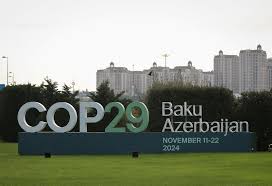
Johannesburg, South Africa — More than three-quarters of African youth (78%) are concerned about climate change – up four points from just two years ago – and these respondents see the issue as an existential threat for themselves, the Ichikowitz Family Foundation today highlighted as global delegations gather in Baku, Azerbaijan for the United Nations’ COP 29 global conference on climate change.
Through key findings of its African Youth Survey, the Ichikowitz Foundation conveys an urgent demand for action from the continent that will be home to 40% of the world’s young people in just six years, according to population experts.
Ichikowitz Foundation Founder and Executive Chairman Ivor Ichikowitz, stated that, “Given the disproportionate burden that Africa shoulders for climate change, the intensity of these concerns as articulated in this year’s African Youth Survey makes sense – According to the United Nations (U.N.), 17 of the 20 countries most threatened by climate change are in Africa. From floods to droughts to storms hammering our coastlines, of all the world’s countries threatened by the temperature increases annually in excess of 1.5 degrees Celsius, those in Africa are the most vulnerable.”
“Make no mistake – The ramifications of continued global inaction in addressing the impact of climate change in Africa will be innumerable, but will certainly include instability, extreme poverty, and mass migration.”
Experiencing this first-hand, Africa’s rising generation specifically cites:
Access to clean drinking water tops African youth climate change-oriented worries, as 76% are concerned about water scarcity, and 40% are spending more than a quarter of their income on clean water – a 14-point increase since the survey was last fielded two years ago;
73% say climate change is currently harming people in their own country while the same percentage believes it will also harm future generations; and…
Alarmingly, 71% fear that climate change will increase the risk of conflicts on the continent.
Low Satisfaction With Government Efforts
While less than half (48%) are satisfied with their government’s performance to address climate change, the substantial majority (81%) — believe their government must do more. Specific actions sought from governments include adopting more green energy sources (80% agree), mitigating the impact on food and water supplies (79% agree), and reducing carbon emissions (78% agree).
Factors Hindering Achievement Of 1.5 Degrees Celsius Target
Still, among the various factors hindering the achievement of the 1.5 degree Celsius global warming target, more than a third (34%) of African youth agree that there is “…too much focus on consensus building rather than action.”
According to the respondents, other barriers include:
· 33% overall (and in Kenya 46%) say individual governments are failing to take action;
· 30% blame low international interest in addressing the problem (in Tanzania, 44% cite this factor);
· 24% identify disputes over compensation for developing countries (in Gabon and Malawi, 31% said so);
· 21% point to inaction by Western governments (in Cote d’Ivoire, 35% do), while another 21% see lobbying by oil and gas companies as the key factor (in Rwanda this was 36% and in Nigeria, 34%).
International Priorities
In terms of how best to tackle the broader issues driving climate change, young African see greater value in collective action.
For instance, 51% want to push action and debate among all actors on the international stage, even if that means it will take longer to act, than as opposed to the 44% who would prefer to work with a smaller group of nations to get results more quickly.
Similarly, a majority (53%) say the priority is to push for solutions to future climate change issues, as opposed to the 44% who believe it is instead to push for financial compensation from developed nations.
“Of all the world’s youth, Africans offer perhaps the most principle call for action today, because they are the least responsible for the carbon emissions that drive climate change, yet they are also the most adversely impacted by its increasingly violent and disruptive effects,” Ichikowitz observed, adding: “As key players gather for the COP 29, there is a moral obligation to heed these voices as an urgent, clarion call for realizing bold, necessary and accountable goals, without further delay.”
Comments
About Author


