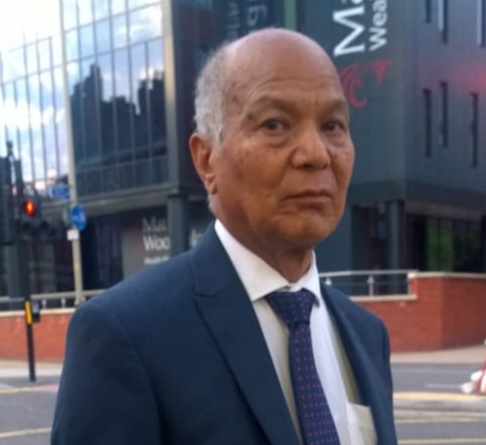


Dr Shanta Bir Singh Tuladhar is the First Traffic Engineer of Nepal. He published an article ‘Time Has Come’ in The Rising Nepal about 40 years ago. He had predicted about the Traffic Problems of Nepal. Now the traffic problem in Kathmandu Valley is critical and immediate measures have to be adopted.
Below os the concept paper he wrote:
Contents
1. Prologue
2. Main Issues
3. High-level Committee
4. Immediate Steps to be Taken
5. Short-term and Long-term Measures
6. Traffic Database
7. Electric/ Solar based Mass Transportation System
8. Skyway
9. Epilogue
1. Prologue
Kathmandu Valley (KV) urban road traffic is in chaotic condition. Flow of traffic and pedestrians is very complicated, inconvenient, congested, and uncomfortable. Pedestrians are very unsafe. Elderly people, disabled people, children and ladies, and foreigners are not taken care of. Businesses are hampered. Lots of immediate measures have to be implemented. While widening and development of roads, heritage sites, and indigenous peoples’ localities must be preserved and left intact.
2. Main Issues
1. Overcrowding
2. Mix of pedestrians, hand carts, rickshaws, motorcycles, cars, vans
3. Zebra crossing not honoured
4. No traffic discipline
5. Pedestrians most neglected
6. Businesses hampered
7. Tourists not taken care of
8. Haphazard parking
9. Elderly people, disabled people, children and ladies not taken care of
10. Risks of accident in roads and narrow lanes
11. Dead slow traffic speed
12. Roads full of parked motorcycles
13. Taxi drivers not using fare meters and charging exorbitantly according to their own sweet will
14. Unorganised bus, mini-bus and tempo stops
3. High-level Committee
A High-level Traffic Management Committee to be formed of the following:
1. Mayor, Kathmandu Metropolitan City
2. Mayor, Lalitpur Metrpolitan City
3. Mayor, Bhaktapur Sub-Metropolitan City
4. Mayor, Madhyapur Thimi Municipality
5. Director General, Department of Transport Management
6. Chief, Traffic Police Department
7. Director General, Department of Roads
8. Chief, Transport Entrepreneurs’ Association
9. Chief, Hotel Association of Nepal
10. Chief, Tourism Entrepreneurs’ Association
11. Chief, Tourism Development Board
12. Chief, Restaurant and Bar Association
13. Chief, National Chamber of Commerce
14. Chief, National Environment Council
15. Any other dignitaries
4. Immediate Steps to be Taken
1. Import of Motorcycles and plying inside KV to be stopped immediately
2. Import of Cars and plying inside KV to be stopped immediately
3. Existing old motorcycles, cars, buses, mini-buses, lorries, trucks and other vehicles older than 10 years must be scraped
4. Banning of use of hand carts and rickshaws in the core city areas from 05:00 to 23:00
5. Hand carts and rickshaws can be operated only 23:30 to 04:30
6. Parking of Motorcycles and Cars on the roads must be banned
7. Pedestrianization of Localities to be done immediately:
1 Ason 2 Masan Galli 3 Mahabouddha Galli 4 Asan Galli 5 Tyauda Galli 6 Jyatha Galli 7 Indrachowk 8 Chwakhachhen Galli and so on
8. Zebra Crossings to be planned and maintained
9. Wherever possible, motocycles to be segregated
10. Wherever possible, bus priority lanes and safa tempo lanes to be provided
11. Motorcycles must not be allowed to overtake cars.
12. Vans and trucks to be allowed in City Roads only from 23:30 and 04:30
13. Parking areas for cars and motorcycles to be allotted and managed by automatic ticketing machines
14. Roads in city core areas to be resurfaced and well-maintained free of any pot-holes
15. Road drainage system to be maintained properly
16. Tundikhel area to be managed for motor cycle parking
17. Fire brigade can be used for car parking
18. Footpaths must be free for only pedestrians
19. Bus stops, Safa Tempo Stops and Minibus stops to be arranged properly.
20. Overcrowding of buses must be stopped.
21. No of commuters must not exceed the seating capacity of bus, mini-bus or Safa Tempo
22. Bus and mini-bus park to be arranged and managed properly
23. Priority seats for disabled, ladies, elderly people and children should be made available in all buses and mini-buses
24. Frequency of buses, mini-buses and safa tempos must be maintained as per time-table approved by the Traffic Management Committee
25. Sweeping of roads by machine must be done in all the core city roads
26. Recyclable items bins and general waste bins , and commercial waste bins must be provided at suitable places and collections arranged in night times
27. Traffic signals must be repaired and maintained ;properly.
28. Additional traffic signals have to be installed.
29. Taxi meters must be updated
30. Taxis must run on meters only whether short or long distance
31. Taxi drivers not abiding by laws and refusing to serve needy passengers or refusing to run meters must be banned from driving taxis
32. Traffic police must be on the alert to see that taxis run on meters only and not asking extra money from passengers
5. Short-term and Long-term Measures
Short-term measures
1. Parking lots for motorcycles around Tundikhel, Jamal, Sohrakhutte, Bishnumati, Dharahara area and so on as necessary and according to availability
2. Parking in Fire Brigade area
3. Repair of existing Traffic signals
4. Installation of new traffic signals
5. Pedestrianization of core city areas
6. Introduction of one-way systems
7. Introduction of speed limits
8. Introduction and strict control of zebra crossings
9. Introduction of pelican signals
10. Shopping Malls and Supermarkets must be asked to provide parking lots according to their Travel Plans and Transport Assessments
Long-term Measures
1. Underground Parking lots to be constructed under Tundikhel, and Ratna Park
2. Multi-storied parking lots to be constructed in Fire Brigade area of Kathmandu, Lalitpur and Bhaktapur
3. Building Laws must be revised to incorporate compulsory provision of parking spaces
4. Phase wise replacement of petroleum vehicles by electric vehicles
5. Construction of Skyway Network along the Super-outer Ring Road as mentioned in 9th Plan of Nepal Government and along radial roads and Outer Ring Roads and Inner Ring Roads.
6. Automatic traffic control system of KV must be adopted.
6. Traffic Database
1. Pedestrians and traffic volume and speed data to collected in all core city roads every month
2. Accident data to be collected in all core city roads
3. Road Condition data to be collected
4. Road Drainage condition data to be collected in all core city roads every 3 months
7. Electric/ Solar based Transportation System
By 2040, Nepal must be made an electric/solar based transportation system. No petroleum based vehicles will be allowed to ply on Nepal Roads after 2040

8. Skyway
Introduction of solar-powered Skyway is best suited for Nepal
9. Epilogue
1. This is just an indication of the Concept Paper. This is not complete in itself.
2. Principle of 3-Es of Traffic Engineering viz. Engineering, Education and Enforcement must be adopted.
3. Principle of 3-Cs of Traffic Engineering viz. Co-ordination, Cooperation and Courtesy must be adopted.
Dr Shanta Bir Singh Tuladhar, the author of ‘Traffic Management in Kathmandu Valley: A Concept Paper’ is The First Traffic Engineer of Nepal residing in England, United Kingdom since 1st February 2007. He was Principal Consultant/Traffic Engineer in TRL Ltd in 2007-2008. He is The First Director General with PhD Degree of Department of Transport Management, Government of Nepal in 1995.
Dr Tuladhar is the First PhD in Traffic Engineering from Faculty of Engineering – Civil, Bangalore University in 1988. He is the First Rank Holder in ME Civil (Highway and Airport Engineering) in Bangalore University in 1981. He graduated in B.E. Civil from University of Calcutta in 1969. He has about 50 years of experience in Highway Engineering, Transport Planning, Road Safety, Environmental Science, Software Development and Statistical Analysis. He had delivered Lectures on ‘Highway, Traffic and Transportation Engineering, Road Safety, Environmental Pollution, Traffic Planning and Management and Regional Transport Planning’ for M Sc Urban Planning at Depart of Architeture and Urban Planning, Institute of Engineering, Tribhuvan University, Nepal. He was Course Coordinator, Question Setter and Examiner of Transport Planning Course (Module) for 6 years from 2000-2006.
He has published more than 26 Papers on Highway Engineering, Traffic and Transport Engineering, Road Safety, Environment, and Computer Science published in various National and International Journals and Magazines. His books on Traffic Engineering, Traffic Flow Theory, Engineering Statistics are yet to be published. He is the Editor of Monthly Newsletter of Transport Statistics Users Group (TSUG) from March 2017 to date.
Currently he is working as Volunteer in Charity Work as Hope UK Educator since 2017, Executive Committee Member of Watford Interfaith Association (WIFA), One Vision in 2019 and involved in various Community works.
Comments
About Author