

By Mary Doma.
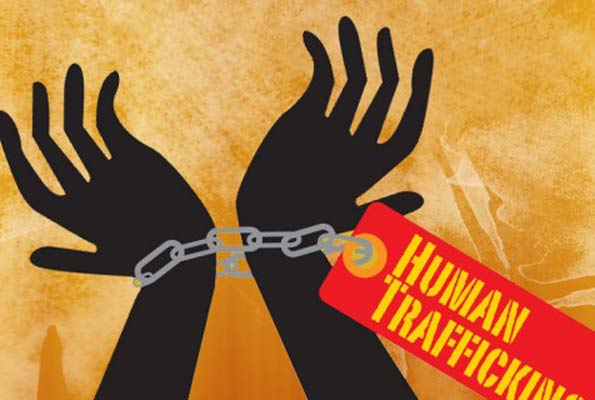
Harare, Zimbabwe. (News Of The South) – Activists and Social welfare experts have called for improved co-ordination and integration of services between various role players to give better support to victims of human trafficking and curb this inhuman act.
At a lecture held by Women’s University in collaboration United States Of America Embassy , the stakeholders looked at ways to implement the Prevention and Combating of Trafficking in Zimbabwe and the world .
Speaking at the event was Ms Karen Kelly counselor for public affairs United States of America embassy who was standing in for the ambassador Harry Thomas, “this is a quest to celebrate women’s milestone and to raise issues that affect women today. I believe that this is a very fitting endeavor for a women’s instituion.”
She said ,”Millions of men, women and children around the world are currently victims of human trafficking – bought and sold as commodities into prostitution ,organ trading and forced labor.”
The International Labor Office estimates that forced labor generates $150bn in illegal profits every year. Two thirds comes from sexual exploitation.
Karen said “According to the U.S Department of States Trafficking in Persons Report for 2015,55 percent of trafficked people worldwide are women and girls ;26 percent of trafficked persons are children.”
“My hope is that this lecture will not only engage you but that it will also serve to educate you, to raise awareness on this issue and to inspire you to seek out your role in the anti-human trafficking effort, as Zimbabwe is not immune from this global scourge .”
The keynote speaker Ms Rindai Chekerwa the program Director at Inhuman Trade explained what human trafficking is and went on to describe how it is done and how to prevent it.
“Human trafficking is modern-day slavery. It involves one person controlling another and exploiting him or her for work. Like historical slavery, human trafficking is a business that generates billions of dollars a year. But unlike historical slavery, human trafficking is not legal anywhere in the world. Instead of being held by law, victims are trapped physically, psychologically, financially or emotionally by their traffickers.”
“It doesn’t discriminate on the basis of race, age, gender, or religion. Anyone can be a victim.”
Rindai said, “Most of the human trafficking victims in the world are female and under 18, but men and older adults can be trafficking victims too. While poverty, lack of education, and belonging to a marginalized group are all factors that increase risk of trafficking, victims of modern-day slavery have included children from middle-class families, women with college degrees, and unemployed people .”
The good news is not only that we can begin prevent and try to end human trafficking around the world, but we can end it within a generation. But to achieve that goal, everyone needs to work together, “she said .
“Already, activists around the world are launching and winning campaigns to hold governments and companies accountable for human trafficking, create better laws, and prevent trafficking in their communities”.
Human trafficking is a organized crime ,it is not clear who is who hence the law enforcement need to get sensitivity training on how to handle such cases ,”said Chekerwa.
Women and girls from Zimbabwean towns bordering South Africa , Mozambique and Zambia are subjected to forced labor, including domestic servitude and sex trafficking brothels that cater to on distance truck drivers on both sides of these boarders.
Ms Rindai made suggestions so as to help prevent and fight human trafficking which were that if there was fast-tracking of integrated information management systems between role players, Continuous research to make more data available for better understanding of human trafficking, This research will also help in capacity building for practitioners, The government must make sufficient resources available to fight human trafficking, and Programmers must emphasize prevention of human trafficking through public education initiatives.
The lecture discussion sought to strengthen the partnership between stakeholders in the fight against human trafficking, share best practices in the prevention and combating of human trafficking in Zimbabwe, South Africa and the world as well as promote an extensive and accelerated skills training program for different role players and frontline personnel, among other things.
Comments
About Author